Business Waste Removal in Swiss Cottage
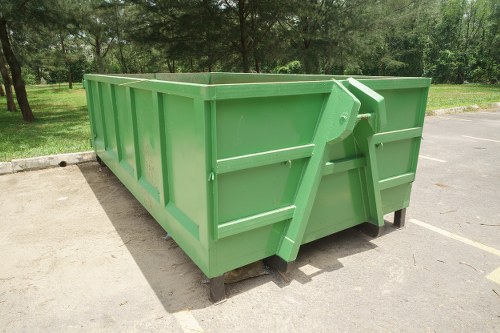
Business waste removal in Swiss Cottage needs to be orderly, discreet and suited to the way your premises actually operate. We provide a practical service for offices, shops, clinics, studios and other commercial premises that need a dependable way to clear accumulated waste, unwanted fixtures and recyclable materials without interrupting day-to-day work. The focus is on sensible planning, careful handling and a tidy finish that helps keep work areas usable.
Our approach covers regular commercial clearances and one-off removals, with attention to access, sorting and the type of waste involved. Some jobs are straightforward and others need a little more coordination because of shared entrances, lift use or mixed materials. If you need a clear next step, ask for a quotation and outline the items or materials that need removing.
When businesses arrange clearance, the most useful information is usually the type of waste, the approximate volume and any restrictions on access or timing. That helps shape a service that is realistic rather than rushed. We do not assume every workplace has the same needs, so the service can be matched to lighter office collections or heavier clear-outs involving bulky items, packaging or redundant fittings. Call to action: make an enquiry today.
Commercial clearance options
Commercial waste removal is often more than taking away a few bags. Offices may need desk clearances, packaging removal, archive disposal or the careful handling of furniture that is no longer required. Retail premises can generate cardboard, display units, broken stock containers and storage clutter. By separating different streams where practical, the work becomes easier to organise and more suitable for reuse or recycling routes where those are available.
For many customers, the key decision is whether the waste can be collected in one visit or whether the job is better divided into stages. That depends on access, the amount of material and whether items have to be moved through busy internal spaces. A useful first step is to identify what is staying, what is leaving and whether any items need special care because they are fragile, dusty or awkwardly shaped. Business waste removal is the main service page for this work.
Typical commercial clearances can include office furniture, shelving, packaging waste, mixed non-hazardous rubbish and obsolete equipment that is ready to be removed from the premises. Where the contents are mixed, a considered sort at the point of collection helps keep the process efficient and reduces the chance of useful material being bundled together with general waste. If your site has specific access rules or loading limits, it is worth mentioning them before the job is confirmed.
Office and workspace waste
Office waste removal is often about restoring usable space without disturbing staff for longer than necessary. That can involve removing old chairs, desks, filing cabinets, broken office storage, redundant electronics or general accumulated rubbish from shared rooms. Workspaces also tend to collect items gradually, so a clearance is sometimes best planned around quiet periods, room moves or the end of a tenancy.
Office clearance is a helpful option when the requirement is concentrated in desks, meeting rooms or back-office storage rather than the whole premises. Some clients want a single room cleared while others need a larger office layout stripped back before handover or refurbishment. If there are items to keep, it helps to mark them clearly or move them aside beforehand so the clearance is more accurate and less likely to slow the working day.
To keep things practical, many businesses prepare a simple note of the rooms involved, the floor level and any items that should not be taken away. A short list is often enough:
- furniture and storage units
- paper waste or archive material
- cardboard and packaging
- mixed office rubbish
- equipment that is no longer in use
Furniture, fixtures and bulky items
Many business clearances involve more than loose rubbish. Heavy furniture, counters, shelving, reception pieces and other bulky items can take up valuable room and often need to be removed carefully to avoid damage on the way out. A sensible clearance plan considers the size of the item, the route out of the building and whether anything has to be dismantled first. That is especially important in shared buildings where corridors, stairs and lifts need to be kept clear.
Furniture clearance is useful for premises where the main task is to remove usable or unwanted furniture in an organised way. Some items may be suitable for reuse, while others are simply ready for disposal because they are worn, damaged or no longer needed. The same applies to more specialist pieces such as office storage, worktops or waiting-room seating, which can be awkward to shift without planning.
Furniture disposal supports situations where items are at the end of their life and need to be taken away as waste rather than retained. If furniture is being replaced, it is often best to coordinate removal with delivery or refit dates so the space does not become congested. Clear access and accurate item descriptions help make the collection more straightforward, particularly where the job includes large or unusually shaped pieces.
Recycling and material sorting
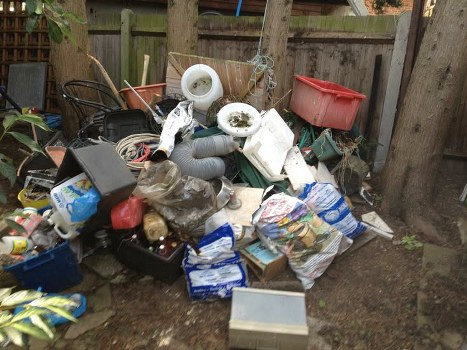
Commercial waste is often mixed, but that does not mean it has to be handled in a single undifferentiated load. Sorting materials where practical can make the clearance more efficient and may support recycling routes for suitable items. Cardboard, office paper, some plastics, metal fixtures and reusable furniture can often be separated from general rubbish if they are presented in a sensible way and if the collection is planned with enough room for sorting on site.
Recycling and sustainability explains the approach to handling waste with resource recovery in mind. In day-to-day terms, that means looking at what can be separated before loading, what needs to be kept apart because it is contaminated, and what should simply be treated as general waste. Businesses that regularly generate packaging or office waste often find that a repeatable sorting routine makes collections easier and tidier.
Useful planning points for this kind of work include keeping recyclable items dry, placing smaller loose materials into appropriate containers, and avoiding the mingling of clean waste with heavily soiled items where it can be helped. These simple steps are not complicated, but they can improve the way a collection runs. If you want to discuss the likely mix of materials, a short description is often enough to start the process.
Special items and regulated waste

Some commercial clearances need more care because the items involved are unusual, heavier than standard office waste or subject to extra handling requirements. Fridges, appliances, mattresses, sofas and certain other bulky pieces can be awkward to move and may need a collection plan that reflects their size and construction. In a business setting, these items may come from staff rooms, rental units, hospitality spaces or storage areas that are being reworked.
Fridge and appliance removal is relevant where electrical items must be taken away from premises in an orderly fashion, while mattress and sofa disposal can help with large soft furnishings that are difficult to transport through standard routes. Where waste is more complex or potentially hazardous, it is important to separate it from ordinary commercial rubbish and check the correct handling route before the job is arranged. Unsupported claims about specialist treatment are best avoided; the type of material should simply be described accurately.
Hazardous waste disposal covers items that need particular attention, and that is why clear descriptions matter. If a site has mixed waste, it helps to identify anything that might require additional precautions before the visit. Do not leave restricted items mixed in with general waste; that makes the job harder to manage and may prevent a straightforward collection from going ahead as planned.
Preparing a commercial clearance
Good preparation does not need to be elaborate. For many businesses, the most useful step is simply to separate the items that are leaving from those that are staying, then note any access issues that might affect removal. If waste is in a back room, basement, upper floor or shared corridor, that affects how the collection should be organised. A clear picture of the load helps us discuss the work sensibly and avoid unnecessary disruption.
Pricing and quotes is the relevant page if you want to understand how quotations are prepared for different kinds of commercial work. The main factors are usually volume, item type, access and the effort involved in loading. It is also sensible to mention whether the clearance needs to be done alongside a refit, a move or a routine tidy-up, because timing can influence how the work is arranged.
When asking for a quotation, keep the description honest and practical. A few photographs can be useful, but they are not always necessary if the job is small and easy to describe. Likewise, a short inventory of rooms or item types can help where the clearance is more involved. The aim is clarity, not paperwork for its own sake, so one straightforward message is often enough to begin.
About Swiss Cottage
Swiss Cottage is an area in the London Borough of Camden, close to the boundary with neighbouring parts of north-west London and named after the pub and building that gave the district its identity in the nineteenth century. The locality sits on rising ground around Finchley Road and is well known for the Swiss Cottage roundabout, a major junction that shapes movement through the area. Its most prominent modern landmark is the Swiss Cottage library, a striking building designed by Sir Basil Spence and completed in 1964, which remains one of the best-known pieces of post-war civic architecture in Camden. Nearby, the Hampstead Theatre has long added to the district’s cultural profile, while the surrounding streets include a mix of mansion blocks, converted terraces, purpose-built flats and local shops that reflect the area’s gradual urban development. Swiss Cottage lies close to the open spaces of Primrose Hill and Regent’s Park to the south-east, as well as the greener residential character of Hampstead to the north, giving it a distinctive position between busier arterial routes and calmer neighbourhood streets. The area has also been shaped by transport history, with Finchley Road forming a key north-south corridor and the local Underground station linking it firmly into the wider city. For much of its history, the district has balanced residential life with commercial activity, and that combination is still visible in its streetscape today.
Working around access and timing
Commercial clearances are often easiest when access is well understood in advance. Shared entrances, timed loading bays, security desks, lift restrictions and narrow stairwells can all affect how a collection is carried out. A business that uses regular customer access may need the work done quietly or outside peak times, while a back-office clearance may simply need enough room for safe movement. These are practical details, not complications, and they are best considered before the job begins.
Book online may be useful if you already know the kind of removal you need and want to send the details through in one place. Even when a collection is straightforward, it still helps to state what is being removed, where it is located and whether there are any access limits. If you would rather speak first, a concise description of the waste and the site layout is usually enough to guide the next step.
There are also situations where a business wants the clearance to happen in stages, for example when rooms are being emptied one after another or when different teams need to keep using parts of the building. In those cases, sequencing matters as much as the waste itself. Tell us what is changing and what must stay available, and the work can be set around those needs more effectively.
Practical waste types and related services
Some commercial premises generate waste that is better treated by type than by room. Offices may have confidential papers, shops may have packaging and stock returns, and workshops may accumulate offcuts, broken shelving or mixed non-hazardous rubbish. A flexible service can account for those differences without turning the process into something overcomplicated. The aim is to remove the relevant waste cleanly and keep the remainder of the site in order.
Confidential shredding is worth considering when paper records, archived documents or other sensitive paperwork need to be destroyed in a controlled way. It is a different task from ordinary rubbish removal, so it makes sense to separate it from bulk clearance items. Some businesses combine shredding with a wider tidy-up, while others only need this more specific service on its own.
Builders waste clearance can be relevant when a fit-out, repair or refurbishment has left material behind, while waste removal is a broader page for general collections. If you are unsure which route is the best fit, describe the items rather than trying to categorise them perfectly. A practical description of the waste is usually more useful than an assumption about the label.
Choose the right clearance approach
Not every business needs the same level of service. A small office tidy-up may simply involve a few bulky items and some bagged waste, whereas a larger commercial clearance may include furniture, mixed recyclable material and items that have to be moved from several rooms. The right approach depends on what is present, how it is stored and whether any of it needs to be handled separately. Good planning keeps the job manageable and avoids unnecessary second visits.
About us provides more background on the wider company, while contact us is the best route if you want to request a quotation for business waste removal in Swiss Cottage. If you have an existing service plan or a one-off clearance in mind, the next step is simply to describe the items, the location and any timing constraints. That is enough to begin a practical discussion.
Ready to arrange your clearance? Send over the details and ask for a quotation. If you prefer, keep it brief and list the main items first; the important thing is to start with accurate information so the collection can be matched to the work required.